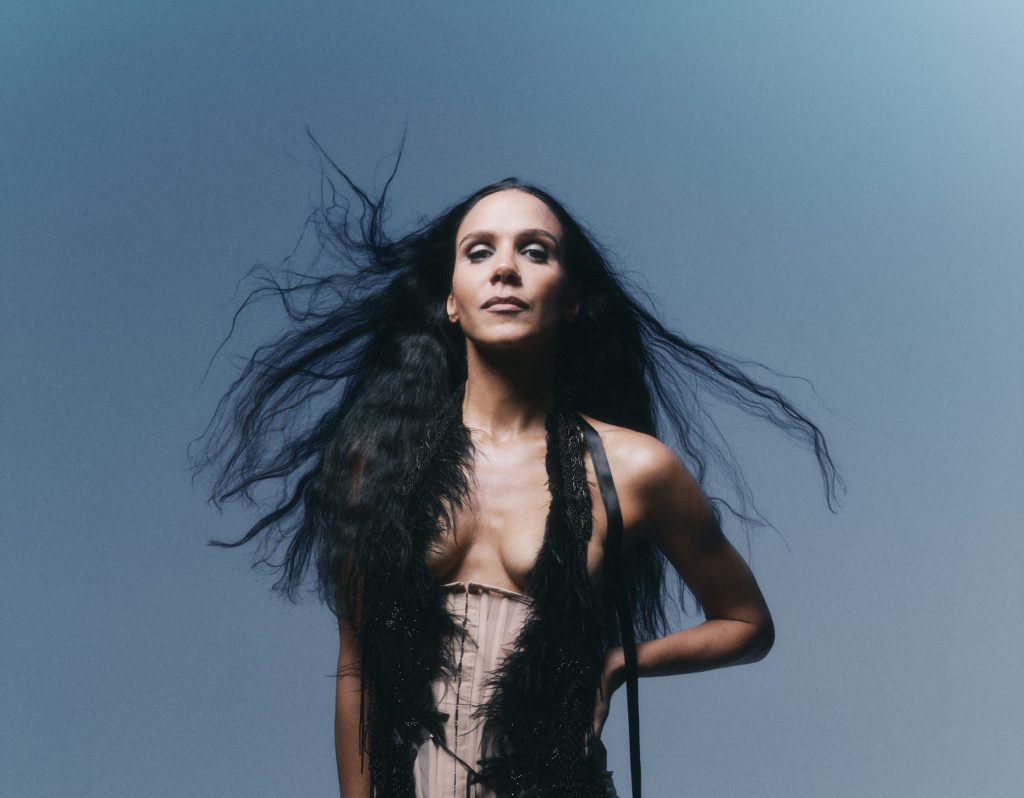
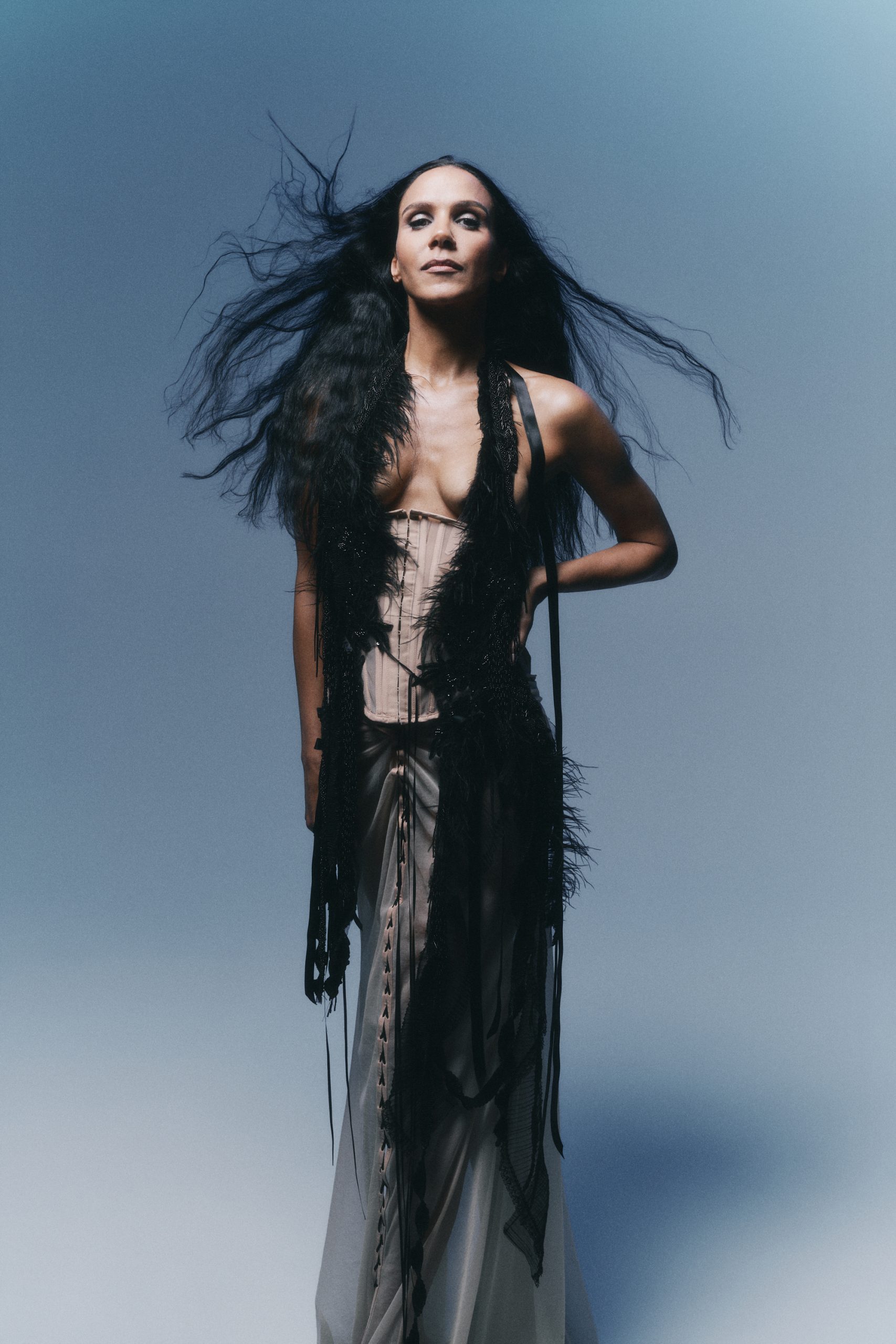
UK techno artist ADRIANNA has quickly become a standout presence in the scene, fusing incisive production with dynamic DJ sets that have drawn support from Charlotte de Witte, Adam Beyer, Joseph Capriati, and Nicole Moudaber. Her work has also been spotlighted by Vicious Magazine, DJ Mag Netherlands, DJane Mag and Mixmag. The new Power Back Remixes EP, is out now via her own label TMPL Music, which hands her single ‘Power Back’ to Italian techno mainstay T78, who delivers both a trance-infused and a peak-time remix. This release kicks off a seven-week remix series, with contributions from Wehbba, Alex Stein, Christian Smith, Drunken Kong and The Obsessed, leading up to the full-length album ADRIANNARCHY, set for release on 23 October. ADRIANNA’s momentum has propelled her to stages at E1 London, Eden Ibiza, Creamfields’ Steelyard, and Forbidden Forest’s Arcadia Spider, where she has performed alongside Pan-Pot, UMEK, and Alan Fitzpatrick. The campaign culminates with a headline set at Amsterdam’s Faralda Crane during ADE 2026, coinciding with the album launch.
In the following interview, ADRIANNA discusses the creative vision driving her latest project and reflects on the journey that has shaped her career to this point.
Hey, thanks so much for sitting down with us today – what’s been the absolute best part of your week so far, music aside?
Of course, thanks for the chat. That would probably be playing with my animals.
What is your Primary Role(s) in Electronic Music? For Example, are you a DJ, vocalist, producer etc.
I do all those things, right now I’m focusing on the release of my album “ADRIANNARCHY” which is my production and vocals as well as our upcoming TMPL Music Label party at ADE in the Crane. I’ll be DJing a few parties there and am really looking forward to that.
What is your preferred main electronic music genre/style, and what makes you resonate with it?
Peak time Techno is my favourite, but I also incorporate raw, acid, hard, trance and other elements. I love the genre because it’s impactful and energetic, there is space for vocals and big buildups without necessarily being overly commercial sounding.
If someone wanted to understand the real vibe of you as an artist beyond the music, what’s one story from your everyday life that says it all?
My baseline nature is quite repetitive, so I try and focus on using that for positive outcomes, whether that’s practicing a skill, exercise or focusing on something positive. I’m naturally an on or off person where I have a lot of energy or very little so I’m working always to maintain as much of a balance and equilibrium as possible.
Describe your typical studio/production workflow (e.g., hardware vs. software focus, favorite gear, creative starting point).
Currently mostly software, I use MIDI controllers with plugins and sometimes external synths, I was mainly using Logic for years but am also working in Ableton more now and do like using the Push. Often, I get ideas when travelling and my creative starting point will be in voice notes or a basic quick project that I can expand on later.
Which major music platform (Spotify, Apple Music, Bandcamp, Soundcloud, etc.) generates the most engagement for your work?
It’s different audiences on different platforms. Spotify for releases, I share my monthly sets on SoundCloud which are syndicated and get uploaded to Apple Music though various stations, YouTube as well is good for sets and a great place for people to discover music.
Do you prefer performing Live Sets (using hardware/controllers to manipulate sound) or DJ Sets (mixing tracks)? Why?
For a while my setup has been CDJ’s with an RMX 1000, but I’ve been experimenting with incorporating synths with vocals which has been refreshing.
What’s one underrated production skill you wish more electronic artists focused on?
Learning music theory, uncommon scales and modes I find can make for unique productions. And playing with samples, even if they are from popular packs, to make them sound more unique. I think this comes with experience as well, because a lot of the tips I have now I’ve learned from not doing it beforehand.
Do you see AI as a threat to musicians, a helpful collaborator, or something else? How do you plan to keep your music relevant as the industry changes rapidly because of these tools? By embracing AI, avoiding it, or taking a different approach?
I see it sort of splitting, it’s opening the doors for some people who may not love producing their own music and are after a certain sound and then, I think others are leaning more into an analogue quality which maybe doesn’t want everything so “perfect” sounding. I’ve been writing music for a long time because I need the act of expressing something, not necessarily because I want a song to listen to, or for others to hear. There is a certain timbre and resonance that comes from a lived experience. But I’m not against technology, I don’t carry a paperback thesaurus, I make songs on a laptop and carry my music library in my pocket.
If you are a producer, how often do you utilize generative AI tools (e.g., for mastering, sample generation, synth patching, etc.) in your current process?
I personally do not use AI for generating samples or patching. Some people consider the stem splitter AI which I do use on occasion for a remix or bootleg type project or if I am curious about different layers of a track and want to quickly hear them more isolated.
What is the single biggest challenge facing electronic music artists in the next 5 years?
Possibly demand, there are a lot of DJ’s and many clubs are closing. I think people see the 15 second drops or crowds and think they want to be an artist. Festival culture is glamorised and the community aspect and way people socialise is changing. The barrier to entry is low with availability to music, gear and social media marketing compared to the way in which the industry previously worked. I think regardless of what you’re doing to be successful it takes many years of time, dedication, patience and resilience as well as learning and developing skill.
How would you describe your creative process when a new beat or synth line first clicks?
With my album I was thinking a lot about key before writing the melody. Thinking about the mood of what I wanted to convey before choosing chords and instruments. That was different than the way I made electronic music in the past years.
What’s the toughest technical or industry obstacle you’ve faced as an electronic artist?
One of the biggest obstacles I have faced is keeping an online presence. I am an artist and performer but am also introverted. That aspect sometimes feels more draining than socializing in public, where you get the exchange of connecting face to face with people. Music is something that has always been in my life; the audience, sharing, branding and commercialisation of it is something I sometimes struggle with. Making and building relationships with people I can’t see or look in the eye, read their facial features, it can be hard to build connection in a way that feels authentic but I’m also grateful for the technology because it is powerful.
If you could revisit one decision from your artistic journey and do it differently, what would it be?
Working on my nervous system and addressing past personal struggles sooner. I thought I was confident, but it was very superficial. I needed to work a lot on my sense of self and genuine self-worth to not be swayed by others. I was too insecure to stand by my work or who I was at the time. It’s important to give a lot of compassion to previous versions of myself. It’s hard to create if you are judging yourself harder than anyone else. As artists, by the time we finish a piece of work, we may no longer be in that place, but we don’t have to destroy everything and pretend that didn’t exist.
What’s your current favorite piece of electronic gear or plugin that you can’t stop playing with in the studio?
I’ve been using the Acid V by Arturia plugin a lot lately and love the sound. I used the Humanoid by Baby Audio a lot in my recent projects for vocal layering as well. My Korg Neo I’ve been plugging into my mixer and using with my decks which has been a lot of fun.
If you could change one thing about the modern music industry overnight, what would it be?
Maybe the constant comparison, it’s the opposite of community and forces our brains to rely on dopamine instead of serotonin. This gives us fleeting highs rather than genuine satisfaction and true connection. With social media, some people say the algorithm is psychologically feeding us with “Aspire, Desire, Acquire” as a sales funnel. I think in music, media, and life, it’s important to be free to think for yourself. Be open to looking at things from another point of view because there is freedom in our ability to choose.
What’s one unexpected influence, maybe from outside music, that keeps showing up in your work?
I would say anger. I’ve been working my way through a lot of dark and harder emotions. Pretty much since my “Lie To Me EP” resonated with people, I decided it was okay to release music that wasn’t just “positive, happy, party music”. Since then, it’s been a constant thread that has been there. The collabs helped offer another tone (I’m grateful for that) and there were a couple exceptions, but I believe the only way out is through and I’m thankful to have been able to express and process through music. I’m happy now to be mostly on the other side.
Listen to POWER BACK REMIXES EP – T78:
ADRIANNA’s Upcoming Live Dates
Amsterdam, The Netherlands — The Crane — October 23
Amsterdam, The Netherlands — Kraft Events — October 24
Follow ADRIANNA:
Website – Instagram – Facebook – Soundcloud – TikTok – Youtube – Spotify